Home / Uncategorized / Anglophone crisis, in Baba 1, the Sisters of the Holy Union maintain care despite insecurity

Anglophone crisis, in Baba 1, the Sisters of the Holy Union maintain care despite insecurity

Anglophone crisis:

In Baba 1, the Sisters of the Holy Union maintain care despite insecurity

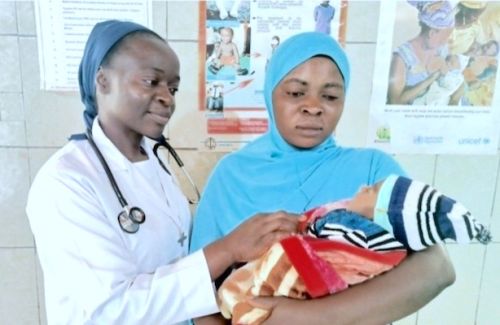
In the village of Baba 1, in the North-West region of Cameroon, the Sisters of the Holy Union continue to provide health services despite the insecurity, poverty and recruitment difficulties affecting this rural area. Their presence, documented by Vatican News, illustrates the fragility of access to care in some territories affected by the Anglophone crisis, where the departure of qualified personnel further complicates the functioning of health structures.

Established in Baba 1 for several decades, the nuns intervene in particular at the Sainte-Monique Catholic Medical Center. Their mission is carried out in an environment marked by weak infrastructure, limited access to electricity and drinking water as well as significant socio-economic difficulties. The congregation itself describes Baba 1 as a remote community affected by the conflict, where access to clean water remains a daily concern.

In its article, Vatican News presents the Sisters of Holy Union as the only religious community still present in the area concerned. A statement that above all underlines the growing isolation of their mission, even if its geographical scope must be distinguished from the whole of the North-West region, where other Christian institutions and denominational health structures remain active.

At the Centre Sainte-Monique, the nuns take care of a population, some of whom have limited financial resources. Health needs are combined with other vulnerabilities, including child malnutrition and lack of access to water. Previous testimonies from the congregation also report agricultural and nutritional initiatives developed at Baba 1 to support women and children, some of which have been disrupted by the violence.

Staff shortages compound challenges

Beyond insecurity, the main challenge is that of human resources. Facilities in remote areas struggle to attract and retain qualified professionals.

"Very few people are willing to work in such a precarious and underserved environment, and those who come demand salaries far above what the community can afford," reports Vatican News.

This difficulty weighs directly on the ability to maintain a regular supply of care. It also highlights a broader constraint: in conflict-affected areas, the existence of a health centre alone does not guarantee access to care. However, it is necessary to have sufficient staff, medicines, equipment and financial means to ensure its operation.

In Baba 1, the Sainte-Monique Catholic Medical Center has been one of the reference health structures in the locality for several years. Cameroonian documents relating to the health infrastructure also list this establishment in the Ndop health district.

A presence maintained despite the crisis

The Sisters of the Holy Union do not seem to be considering leaving Baba 1. Their presence in this part of Cameroon dates back several decades and is part of a broader mission of intervention in health, education and social support. The congregation says it has been established in Cameroon since 1931 and has gradually extended its activities to several regions of the country.

In the North-West, this continuity has taken on a particular dimension since the deterioration of the security situation. The violence disrupted displacement, economic activities and some community initiatives, while making it more difficult to recruit professionals willing to work in rural areas.

For the nuns, the decision to stay is also due to the resilience of the inhabitants they accompany. "Their courage and their ability to hope, even in the face of adversity, are a source of evangelization for them. It reminds them that mission is never a one-way gift, but a shared journey," Vatican News notes.

Beyond the religious dimension, their retention at Baba 1 highlights the issue of the continuity of essential services in territories durably affected by insecurity. In these areas, the closure or departure of a health worker can quickly reduce the possibilities of care for populations already facing remoteness and precariousness.

The presence of the Sisters of the Holy Union thus appears less as a simple symbol of missionary resilience than as a link in a weakened local health system. At Baba 1, the main challenge remains to sustain this presence by guaranteeing the human, financial and material resources necessary to maintain care in an environment where needs remain high.

Leave a Reply

Your email address will not be published. Required fields are marked *