Taking full control of gov’t action PAD . Limbe deep seaport . SONARA . Decentralisation
Will the PM’s swing produce the required results intended? For how long will this new push last? Only time will tell.
By Norbert Wasso Binde, with additional reports from Doh James Sonkey in Yaounde

Table of Contents
- Starting on a High : How Dion Ngute’s premiership began, from his popular Anglophone visits to the 2019 Major National Dialogue and alleged secret separatist talks.
- Challenge to His Authority :The behind-the-scenes moves that undercut his power, from sidelined SGPR meetings to the Kribi refinery humiliation and the SNH-led foundation-stone ceremony.
- The Fightback :How the October 12 election, and a landslide in his home division, gave the PM his moment to reassert himself.
- Moving Ahead Despite Succession Battles : post-election stalemate at the presidency and the succession fights the PM has chosen to work around.
- PM Wades Into PAD Container Scanning Stand-Off :His intervention to keep SGS’s Douala port contract intact through 2032.
- Instructs Gov’t to Fast-Track Long-Delayed Limbe Deep Seaport Project : The push to revive the long-stalled Limbe port project.
- Strategic Project Back on the Agenda : What the Transport Minister and officials outlined for next steps.
- Local Authorities Seek Management Appointments : Why Fako’s SDO says naming the port’s leadership is now the priority.
- Reconstruction and Modernisation of SONARA : The Finance Ministry’s international market sounding to rebuild Cameroon’s fire-damaged refinery.
- The Strategic Choice of PPP to Attract International Markets :Why government chose a Public-Private Partnership model to finance the rebuild.
- Energy Sovereignty and Macroeconomic Competitiveness :The economic case for restoring domestic refining capacity.
- Attacking the Decentralisation Conundrum :The PM’s call for ministries to clear roadblocks slowing decentralisation.
- Reflecting on a Commitment to Professionalisation Within Regions : Funding figures, staffing numbers, and priorities for regional councils going forward.
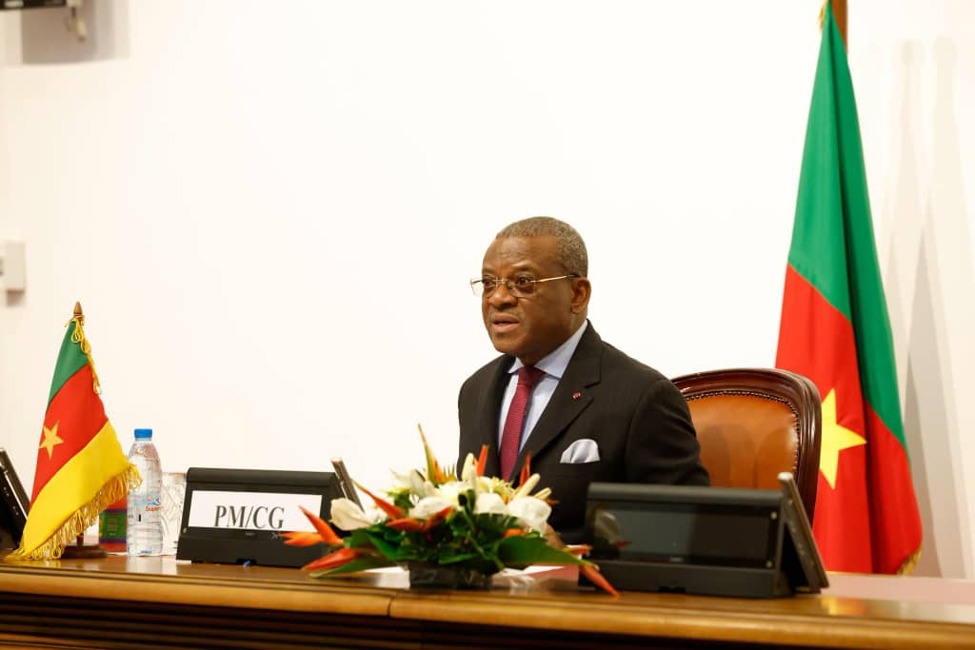
PM Dion Ngute has apparently rediscovered his mojo. After a period of uncertainty and doubts over his authority, ignited by a power tussle and near-undermining of his powers, the Prime Minister, Head of Government, Chief Dr. Dion Ngute Joseph has gone on the front foot since the turn of the year. He is holding members of government by the scruff of the neck to act on salient issues. He is also pushing the government to move on from the lethargic and broken situation it seemed to have dug itself into especially after the October 12 presidential election.
And this despite the succession fights raging at the summit of the state.
Starting on a High
To be sure, Chief Dr. Dion Ngute, a native of Ndian from the Southwest Region, started his premiership on a high. Remember his very successful visits to the restive Anglophone regions. The receptions and popular acclaim surpassed all expectations. The general feeling was that if given a free hand, the trained diplomat would massively impact the festering war in the Northwest and Southwest regions.
His successful handling of the Major National Dialogue towards the end of 2019 was a major masterstroke. Still, with hindsight, critics think it was a monologue that woefully failed to bring together the real protagonists at the table.
Nonetheless, after the MND, PM Dion Ngute allegedly engineered secret talks apparently with the backing of his boss, President Paul Biya. These talks reportedly involved, directly and indirectly, separatist leaders including the jailed Nera 10 in Yaounde and separatist leaders in the diaspora. He was not mentioned directly, but it seems he either approved or knew about the Canada peace talks. Government, through its spokesperson Minister Rene Sadi, vehemently denied and condemned those talks following a communique issued at their end under the auspices of the Canadian foreign ministry.
Challenge to His Authority
With these high-powered successes, stories began creeping out into the public and into newsrooms. They described a deliberate plot and scheme to cripple, cut short and undermine the Prime Minister’s powers. Before the end of President Biya’s last mandate, it was an open secret.
First, the presidency organized meetings chaired by Minister of State, Secretary General at the Presidency, Ferdinand Ngoh Ngoh, with various stakeholders ahead of the presidential election. Many questioned why it was the SGPR and not the PM, Head of Government. No official explanation was given, and many assume it was the Head of State’s will.
The height of the humiliation, though, came in May 2025. A heavily attended CPDM meeting took place at the National Advanced School of Local Administration, NASLA, convened by former Prime Minister and the ruling party’s head for the South West region, Peter Mafany Musonge. There, a visibly irked PM Dion Ngute made a very strong rebuttal to rumours that construction of an ultra-modern refinery was underway in Kribi.
Critics had described the Kribi refinery project as a strategic response to Cameroon’s growing energy needs and the persistent difficulties facing the country’s lone refinery, SONARA (Société Nationale de Raffinage). SONARA has struggled with operational setbacks and limited refining output since a major fire incident in 2019.
Talking specifically about SONARA, the Prime Minister credited “President Biya’s vigilance for ensuring the refinery’s survival despite the destruction of its facilities.” He explained that a special pricing structure had sustained SONARA, ensuring continued employment for its workers. He also dismissed claims that a new refinery would be built elsewhere, stating that “the technical and logistical challenges made such a move impractical.” The crowd met this assertion with thunderous applause.
Almost seven weeks later came the bombshell news: the laying of the foundation stone for a strategic petroleum depot and the construction of an ultra-modern refinery. It shocked Anglophones, especially the CPDM ministers and MPs who had just met with the Minister of State, Secretary General at the Presidency of the Republic, on matters pertaining to the upcoming elections.
Many of the MPs and elite The SUN newspaper spoke to couldn’t hide their shock and disbelief. The foundation of the government seemed truly shaken, and to save face, officials ordered a total boycott of the ceremony by members of government, MPs and elite of the South Region. The interim Minister of Mines and Technological Development, Mr. Fuh Callistus Gentry, was meant to preside at the foundation-laying ceremony, but he didn’t show up.
Despite the boycott by government and other top dignitaries, the foundation-stone ceremony went ahead in all pomp and pageantry. Mme Nathalie Moudiki led the event, representing the Administrator Director General of the National Hydrocarbons Company, SNH, Adolphe Moudiki.
Many are asking why the ceremony went ahead despite government’s disapproval. According to a source, “government didn’t just want to associate itself with it… but they have not outrightly discontinued or suspended the pursuit of the project.” Everybody seems afraid of Mme Nathalie Moudiki, especially since she has openly said she’s taking full responsibility for her actions.
According to our source, the SNH strong lady has a very powerful force behind her “that is why no one can openly come out and call a stop to this project… they rather prefer to boycott the ceremony to lay a foundation stone.” Even more humiliating to the PM was the appointment of his son to lead the C-Star project.
The Fightback
It was the height of humiliation. But Dion Ngute copied from his master, President Biya, who suffered many humiliations from late President Amadou Ahidjo’s powerful ministers and General Managers. He kept calm and waited for the right moment to play his card. That moment came at the October 12 presidential election. The South West region, despite bad results in Fako and Meme Divisions, gave Biya a thumping victory, with the PM’s Ndian Division scoring over 98 percent. In an election that mattered greatly to Biya and the CPDM, the PM was able to stand tall.
Moving Ahead Despite Succession Battles
The country has been at an unbearable standstill since President Biya won an 8th term and was sworn in on November 6, 2025.
In his acceptance speech, Mr. Biya promised sweeping political, economic, infrastructural and social reforms. To date, the country is still waiting. Apart from changing the constitution to introduce the post of vice president, nothing is happening. Meanwhile, the president has just spent over 40 days abroad for what was supposed to be a brief private stay.
Amidst the inertia, cacophony, lethargy and a broken government, a raging battle for succession rages between the clans close to the president. The “unholy war” has even led some to try to mislead the national broadcaster, CRTV, into not reading a decree appointing the vice president and a new government.
In the mayhem and mess, and refusing to be dragged and distracted by the succession fights, PM Dion Ngute has settled for work. He is pushing his members of government to do their work, too.
That is why, since the turn of 2026, the Prime Minister has been boldly attacking sensitive and strategic issues.
PM Wades Into PAD Container Scanning Stand-Off
In January, PM Dion Ngute had to step in and put order at the Douala Autonomous Port, PAD. Through a series of instructions, he specified the return of SGS Scanning SA to the Port of Douala.
The PM addressed two directives to the General Manager of the Port of Douala and to SGS. Through his Secretary General, Séraphin Magloire Fouda, he instructed the continuation of the contract between SGS and the Government, and reiterated that only the signatory authority can decide on its cancellation.
The Prime Ministerial intervention followed an inter-ministerial crisis meeting bringing together all stakeholders, held last January 29. According to PM Dion Ngute, adherence to contractual obligations is of utmost necessity though he agreed that the modernization of the port infrastructure must continue. As a result, the Port Authority of Douala has been given the go-ahead to recruit a second operator for the remaining segments not yet covered by SGS.
Recall that a directive from the Chief of Special Military Staff of the President, signed by Amougou Emmanuel last January 26, had gone to the Finance Minister. It stated that the Finance Minister had given consent for SGS to definitely leave the Port of Douala, “to avoid sabotaging the work of TRANSATLANTIC D. SA.” The SUN gathered that officials had linked the supposed termination of the SGS contract to security reasons. However, PM Dion Ngute’s intervention reversed the situation.
The PM insisted that PAD should follow a “regular procedure” and “strictly in accordance with applicable regulations.” In other words, any new arrangement must go through public procurement mechanisms transparently, without infringing on the acquired rights of the incumbent operator.
The Prime Minister made this move to ward off contrasting signals surrounding the container scanning project at the Autonomous Port of Douala. He also aimed to keep SGS SA in its contract with the government of Cameroon until 2032, as duly signed.
Instructs Gov’t to Fast-Track Long-Delayed Limbe Deep Seaport Project
PM Dion Ngute has instructed government administrations to fast-track the long-delayed Limbe Deep Seaport project, signalling a renewed push to expand the country’s maritime infrastructure and reduce pressure on the Port of Douala.
Officials issued the directive during an enlarged inter-ministerial meeting in Yaounde last June 18, 2026, that reviewed feasibility studies, land demarcation plans and governance arrangements for the future port. At the end of the meeting, Ngute instructed all stakeholders to accelerate preparations and move the project towards implementation.
Strategic Project Back on the Agenda
Located in Fako Division in the South West Region, the Limbe Deep Seaport is expected to become a major gateway for hydrocarbons and agricultural exports while boosting regional trade. Presidential decree revived the project in May 2020, but progress has remained limited since then.
Speaking after the meeting, Transport Minister Jean Ernest Ngalle Bibehe said discussions focused on assessing the feasibility of implementing existing studies and determining the next steps required for construction.
“After various presentations, we noted the strategic character of this project which has the same quality as the Ring Road. The Prime Minister instructed all relevant administrations to get involved so that this strategic structure sees the light of day,” he said.
Officials identified several priority actions, including completing the port’s territorial delimitation and establishing the governance and operational structures needed to manage the facility.
According to the Transport Minister, the Prime Minister also instructed relevant administrations to examine all available options and submit a comprehensive report on the project’s implementation.
Administrative and municipal authorities from Fako Division took part in the meeting, presenting local concerns and proposals aimed at resolving outstanding issues.
Local Authorities Seek Management Appointments
The Senior Divisional Officer for Fako, Engelbert Viang Mekala, welcomed the renewed momentum behind the project but stressed the importance of appointing the port’s leadership.
“It is important for the top management of the Limbe Deep Seaport to be appointed because if the top management of the port is known, I think that all the actions will be taken,” he said.
Mekala added that discussions on land demarcation had advanced, and he expressed hope that the process would be completed before the end of June 2026.
The renewed focus on Limbe comes as the Port of Douala-Bonabéri continues to handle more than 95 percent of Cameroon’s maritime trade while serving several landlocked countries in Central Africa.
Government authorities have repeatedly identified port diversification and logistics modernisation as priorities for improving trade efficiency and supporting economic growth. Officials expect the Limbe Deep Seaport to play a central role in that strategy, providing additional capacity and strengthening Cameroon’s position as a regional trade hub.
Closing the meeting, PM Dion Ngute reiterated his instruction for all stakeholders to accelerate their assigned tasks and ensure the project advances from planning to effective implementation.
Reconstruction and Modernisation of SONARA
Seven years after the violent fire that paralyzed its refining units in Limbe, the National Refining Company (SONARA) is finally beginning its phase of physical rebirth. At the Prime Minister’s instigation, the Minister of Finance, Louis Paul Motaze, organised an International Market Sounding on Monday, June 29, 2026, in Yaoundé. This strategic forum brought together bankers, industrialists and technical partners for two days. It aimed to test the global private sector’s appetite for a Public-Private Partnership (PPP) model dedicated to rehabilitating and modernizing the country’s lone refinery. EcoFinances.Net looks behind the scenes of this offensive and the heavy macroeconomic stakes tied to it.
The Strategic Choice of PPP to Attract International Markets
This titanic project needs financing worth hundreds of billions of CFA francs. To carry it out, the State of Cameroon has resolutely opted for the Public-Private Partnership (PPP) mechanism. The Market Sounding initiated by Louis Paul Motaze is the keystone of this partnership approach. This forward-looking approach lets the government submit the project’s technical and financial outlines to market players, in order to test their interest, measure their perception of risks, and collect their managerial recommendations. By soliciting the expertise and capital of private investors, Cameroon seeks to build a balanced and bankable contractual scheme.
The Yaoundé discussions aim to define a robust project structure, one capable of offering solid guarantees to donors while preserving the sovereign interests of the State. This direct dialogue with international industrialists and financiers ensures that future calls for tenders will align closely with the profitability and security requirements of international markets. It thus avoids the pitfalls of poorly put-together projects.
Energy Sovereignty and Macroeconomic Competitiveness
The expected benefits of refining activities go beyond industrial infrastructure. First, restoring the country’s energy sovereignty stands out as a key macroeconomic challenge. By producing its own refined hydrocarbons, Cameroon will mechanically reduce its vulnerability to global geopolitical shocks that regularly disrupt maritime supply chains. In addition, modernizing SONARA will make it possible to optimize all the logistical costs of supplying petroleum products.
This cost rationalization will directly boost the overall competitiveness of the national economy, by stabilizing prices and easing pressure on the state budget. Finally, this project aligns with the objectives of the National Development Strategy (SND30). It positions Cameroon as a major industrial transformation hub in Central Africa one capable of exporting its finished products and stimulating sustainable growth for the coming decades.
Attacking the Decentralisation Conundrum
PM Dion Ngute has called on ministers to dismantle all stumbling blocks that could slow down the decentralisation process in their various ministries.
The Star Building occupant spoke in Yaounde on Friday, July 10, 2026, while chairing the first extraordinary meeting of 2026 on decentralisation, with members of the National Decentralisation Board.
The gathering carried out an in-depth evaluation of the state of decentralisation. Six members of the board presented exposés on the health of decentralisation, the financing of the process, and implementation of the special status.
The Minister of Decentralisation and Local Development, MINDEVEL, George Elanga Obam, summed up the evaluation in his presentation. He noted that all decrees transferring powers have been drafted, and the President of the Republic has signed six of them.
Since 2021, about FCFA 302 billion has gone to regions in the form of multi-sectoral allocations, Elanga Obam said. As for human resources, he said the ten regional councils today employ some 536 workers, with 338 of them holding fully regularized administrative status.
Reflecting on a Commitment to Professionalisation Within Regions
Officials also judged the function of the special status in the North West and South West regions satisfactory. The Public Independent Conciliators and the House of Chiefs, for their part, have effectively taken up their various roles.
For the second mandate of regional executives, Minister Elanga Obam emphasized that regional councils must strengthen dialogue with stakeholders, and consolidate local taxation, budgetary discipline and revenue optimisation.
The Permanent Secretary, Koa Otsili Medzogo Evelyne, presented the Decentralisation Board’s activities, explaining the work carried out to follow up on recommendations made during previous meetings.
In his keynote, PM Dion Ngute underscored the importance of the decentralisation process and urged the different ministers to dismantle all stumbling blocks that could slow it down in their different sectors.
What many are asking is: Will the PM’s swing produce the required results intended? For how long will this new push last? Only time will tell.