Home / News / Douala Flooding Drainage Project: FCFA 120 Billion for First Works

Douala Flooding Drainage Project: FCFA 120 Billion for First Works

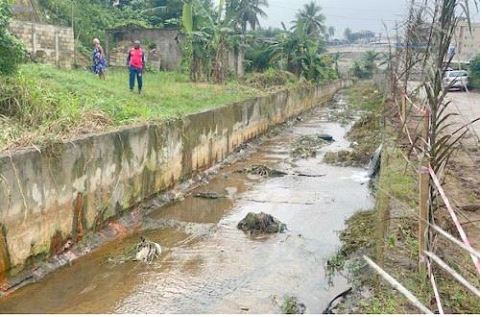
A flooded drainage canal in Douala, illustrating the chronic waterlogging the PVGFD project aims to address.

Flooding in Douala isn’t a once-a-year inconvenience anymore. It’s a recurring crisis, and the newly launched Douala flooding drainage project is the government’s latest attempt to fix it. In fact, every rainy season brings the same familiar problems: submerged roads, cut-off neighborhoods, flooded homes, gridlocked traffic, and stalled business activity across Cameroon’s economic capital.

On July 8, 2026, the government took a new step to address the problem. Officials launched the first major drainage works in the Douala V district under the Sustainable Cities and Land Management Project, known as the PVGFD.

A flooded drainage canal in Douala, illustrating the chronic waterlogging the PVGFD project aims to address.

About the Douala Flooding Drainage Project (PVGFD)

Cameroon’s Ministry of Housing and Urban Development is carrying out the PVGFD, with support from the World Bank. The project carries FCFA 120 billion in funding — roughly $200 million. Overall, it aims to make Douala and Yaoundé more resilient to climate-related flooding while modernizing urban infrastructure and land management systems in both cities.

Why Douala Is So Vulnerable to Flooding

Douala’s exposure to flooding isn’t just bad luck it’s a product of geography and urban growth. As Cameroon’s economic hub, the city hosts a large share of the country’s port, industrial, and commercial activity. But that economic weight sits alongside serious infrastructure gaps.

Several factors make flooding worse with every heavy rain:

  • Low-lying elevation in multiple neighborhoods
  • Continued settlement of marshy, flood-prone land
  • Rapid, often unplanned urbanization
  • Insufficient drainage capacity
  • Gutters regularly clogged with debris

Douala III and Douala V rank among the hardest-hit districts. That’s why the project’s first phase targets these areas first.

What’s Being Built

The initial phase of the PVGFD includes:

  • 10 kilometers of structural drainage systems
  • 14.02 kilometers of new or upgraded roads
  • Multiple crossing structures designed to improve both stormwater flow and traffic movement

More Than Just Drainage

Officials say the project’s goals extend beyond moving water off the streets. By cutting down on flooding frequency and severity, authorities also hope to:

  • Improve day-to-day mobility across affected neighborhoods
  • Slow the pace of road deterioration
  • Make it easier for residents to reach public services
  • Revitalize areas long affected by water insecurity

Minister of Housing and Urban Development Célestine Ketcha Courtès tied the project to a broader push for urban modernization. She described it as a step toward carrying out presidential directives on city modernization, mobility, and land governance. In her words, the goal is to build more resilient and livable cities for current and future residents.

A Governance Component, Not Just Infrastructure

The PVGFD isn’t limited to construction. Spread over six years, the project also includes work on modernizing land records, strengthening urban planning, and improving local governance.

One notable feature is the introduction of formal “city contracts” between the ministry and local authorities. These agreements spell out each party’s responsibilities, funding arrangements, investment priorities, and monitoring processes. Together, they create a shared accountability structure between the central government and municipalities.

Keeping Drains Clear: A Behavioral Challenge

Alongside the launch ceremony, the ministry handed over two mechanical street sweepers to the Douala Urban Community and the Douala III municipality. This detail points to a less visible but critical issue: waste buildup in gutters and drains is one of the biggest contributors to flooding in the city.

Authorities are now urging residents to help protect the new infrastructure by not dumping waste into drainage systems. The underlying message: new infrastructure alone won’t solve the problem if littering and illegal dumping continue.

A Credibility Test for Urban Policy

Douala has seen flood-control announcements before, and the problem has persisted year after year. Still, that history is part of why this project launch carries extra weight it marks a shift from stated intentions to actual construction in specific problem areas.

For officials, the challenge now is twofold. First, they must show that the investment produces real, visible results in the most flood-prone neighborhoods. Second, they must prove that flood management requires long-term structural planning rather than one-off fixes.

Flooding continues to expose the limits of Douala’s current urban model each year. Because of this, authorities are framing the Douala flooding drainage project as more than an engineering effort it’s an attempt to fix a problem that has become structural to how the city functions.

Tagged:

Leave a Reply

Your email address will not be published. Required fields are marked *