Babel of voices
President Biya’s prolonged absence provokes varying reactions from regime barons, constitutional debate
By Norbert Wasso with Agency reports

More than 50 days after President Paul Biya left Cameroon for what the presidency described as a "short private stay in Europe," the political debate has evolved into a constitutional dispute over the legal framework governing the office of the head of state.
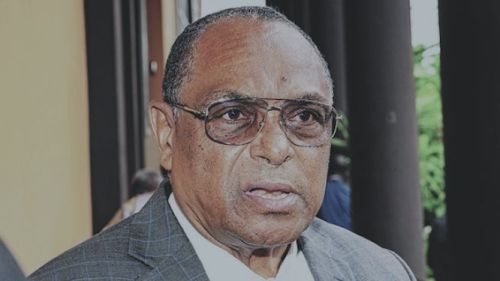
The controversy intensified after Grégoire Owona, Cameroon’s labour minister and deputy secretary-general of the ruling Cameroon People's Democratic Movement (CPDM), argued that the president could legally take up to 80 days of annual leave.
His comments were intended to dismiss claims that the presidency had become vacant. However, they also raised a central legal question: the office of president is a constitutional mandate, not salaried employment governed by the Labor Code.
Biya departed Yaoundé on June 7, 2026. Close to 60 days later, no return date had been announced. Even so, the presidency's official website continued to publish laws, decrees, and official messages attributed to the president, including several documents dated July 22.
Responding to questions about the prolonged absence, CPDM communications secretary Jacques Fame Ndongo had already argued that no constitutional vacancy existed. Owona extended that defense by portraying the president as a worker entitled to annual leave.
"You cannot deny an employee or worker—even if he is the president of the Republic—the right to take leave or criticize where he chooses to spend it," Owona said, adding that such leave could legally last as long as 80 days.
No vacancy
On one key point, CPDM officials are on solid legal ground: a president's extended stay outside the country does not, by itself, establish that the presidency is vacant. Under the constitutional amendment promulgated on April 14, 2026, a vacancy can arise only through the president's death, resignation, or permanent incapacity formally declared by the Constitutional Council. In the event of permanent incapacity, the vice president completes the presidential term. If that office is vacant or the vice president is also unable to serve, the president of the Senate assumes the interim role until an election is held.
The Constitution does not set a maximum duration for a president's private stay abroad. Nor does it equate physical absence from the country with permanent incapacity. Based on the information made public, Biya has not resigned, and the Constitutional Council has not declared him permanently incapacitated. As a result, no constitutional vacancy has been established.
The Constitution also distinguishes permanent incapacity from temporary inability to perform duties. In cases of temporary incapacity, the president may expressly delegate certain responsibilities to the vice president, the prime minister, or another member of the government.
A president is not an employee
Although a prolonged absence does not automatically trigger a constitutional vacancy, relying on the Labor Code to justify its duration presents a much weaker legal argument.
Cameroon's Labor Code governs relationships between employers and employees. It defines an employee as someone who performs paid work under the direction and authority of an employer. The law provides paid leave based on one and a half working days for each month of service, with additional leave available in certain cases, including seniority.
The president of the Republic, however, does not serve under an employer's authority. The office derives its mandate from universal suffrage and is governed by the Constitution. The president serves as head of state, determines national policy, ensures compliance with the Constitution, and guarantees the continuity of the state. The Constitution also specifies that the presidency is incompatible with any other professional activity.
As a result, Owona's comparison amounts to a political analogy rather than a legal demonstration. While the president may naturally take time to rest or travel abroad, the paid leave provisions applicable to employees do not provide the legal basis for a presidential absence. Moreover, no identified provision of the Labor Code specifically grants a head of state up to 80 days of leave.
Opposition challenges
Reacting to Owona's remarks, Mamadou Mota, a senior figure in the opposition Cameroon Renaissance Movement (MRC), accused the labor minister of reducing the presidency to an ordinary job.
"The regime is tying itself in knots and sinking into ridicule," Mota said, arguing that Owona had diminished the country's highest office by turning a constitutional issue into a debate over vacation days. His criticism highlights a genuine weakness in the CPDM's legal reasoning. The continuity of the state is determined by the constitutional powers exercised by the president—not by labor law.
In a press conference held in Yaounde last July 23, the Chairman of the Social Democratic Front, SDF, party had forcefully questioned the enexplained long stay of the president abroad.
"The question every Cameroonian is asking quietly must be asked aloud: who governs this country? The Head of State has been absent from the national territory for more than six weeks -no image, no address, no announced return. The vice-presidency, hurriedly created in April in the name of the continuity of the State, remains vacant. The State runs on delegations of signature that no citizen has ever seen. Cameroon is a Republic on autopilot-and one does not rely on an autopilot in a storm." Hon Osih declared.
Hon. Osih continued that "From a political point of view, the President of the Republic should inform Cameroonians on what is happening to him abroad as he informed us when he was travelling abroad for a brief private stay. He is an institution and he owes us," declared the SDF National Chairman.
That weakness, however, does not establish a constitutional vacancy. Such a determination follows a specific legal procedure and, in the case of incapacity, requires a formal finding of permanent incapacity by the Constitutional Council. Neither a political party, a civil society organization, nor public debate can substitute for that constitutional process.
The controversy therefore centers less on whether the presidency is already vacant than on the transparency surrounding the exercise of presidential authority. While the continued publication of decrees shows that official acts are still being issued in the president's name, it does not fully address questions about the exercise of his broader constitutional responsibilities, including his role as arbiter and guarantor of the regular functioning of state institutions.
Between an opposition that tends to equate a lengthy absence with a constitutional vacancy and a ruling party that relies on labor law to defend the president's leave, the debate reflects two separate legal misunderstandings. The Constitution remains the controlling legal framework. It does not require the president to remain physically present in Cameroon at all times, but it does assign the head of state personal responsibility for ensuring the continuity and proper functioning of the state.