Home / News / Cameroon Weighs CFA80 Billion Deal to Take Control of Two Key Power Plants

Cameroon Weighs CFA80 Billion Deal to Take Control of Two Key Power Plants

Cameroon Weighs CFA80 Billion Deal to Take Control of Two Key Power Plants

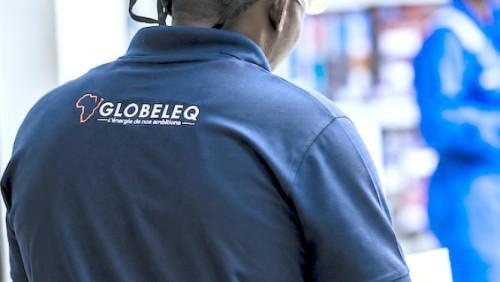
Cameroon is negotiating an estimated CFA80 billion deal to acquire Globeleq’s majority stakes in two power producers that supply more than 20% of capacity on the country’s Southern Interconnected Grid, extending the government’s return to direct ownership of strategic electricity assets.

According to information obtained by Business in Cameroon, discussions cover Globeleq’s interests in the companies that operate the Kribi and Dibamba thermal power plants. No formal offer has yet been submitted to the seller, however.

A source close to the talks said negotiations were progressing well and could be completed before the end of 2026, barring a change in schedule or disagreement over the final financial terms.

The exact scope of the CFA80 billion valuation remains unclear. It has not been established whether the amount covers only Globeleq’s shares, includes receivables accumulated from former electricity distributor Eneo, now Socadel, or incorporates other financial obligations of the two companies.

A source involved in the discussions referred to the prior settlement of amounts owed to Globeleq or the project companies but did not specify their nature. The distinction is significant: unpaid electricity bills from Eneo, dividends declared by KPDC and DPDC, and potential shareholder loans require different accounting treatment and cannot be treated as part of the share purchase price.

Two Plants With 304 MW of Capacity

The transaction concerns Globeleq’s 56% stakes in Kribi Power Development Company (KPDC) and Dibamba Power Development Company (DPDC). The Cameroonian government owns the remaining 44% of each company.

KPDC operates the 216 MW Kribi gas-fired power plant, while DPDC controls the 88 MW Dibamba heavy fuel oil plant. Together, they provide 304 MW, or more than 20% of capacity on the Southern Interconnected Grid, which serves Yaoundé, Douala and the Kribi industrial and port area.

If the CFA80 billion figure applies solely to Globeleq’s 56% stakes, it would imply a combined equity valuation of about CFA143 billion for the two companies. That calculation does not determine their enterprise value, which also depends on debt, cash, receivables from Socadel and investment requirements.

The government will also need to determine how it would finance the transaction. Options could include budget resources, borrowing, installment payments or a structure combining several instruments.

Talks Follow a Series of Payment Disputes

The proposed acquisition follows several periods of tension among Globeleq, Eneo and the Cameroonian authorities.

In September 2024, the Kribi gas plant halted production amid unpaid bills estimated at CFA137 billion. Operations resumed only on February 21, 2025, after a shutdown of nearly five months and an agreement with the government.

Another dispute emerged in June 2026, this time over taxes. After Cameroonian authorities froze the group’s bank accounts, KPDC and DPDC withdrew their plants’ capacity from the Southern Interconnected Grid. Authorities said the disruption affected about 40% of customers in the Littoral and West regions.

The episodes underscored the grid’s dependence on the two plants and the financial weaknesses in the model linking independent power producers to the electricity distributor. Cash-flow difficulties at Eneo, and later Socadel, have repeatedly affected electricity bill payments and producers’ ability to maintain their facilities.

On July 5, 2025, the government exercised its preemptive right to prevent Globeleq from selling its stakes to a third-party investor. That decision paved the way for the current negotiations over a state acquisition.

A Second Acquisition After Eneo

The proposed deal is part of the government’s broader return to direct control of the electricity sector. A few months earlier, Cameroon paid CFA78 billion for Actis’ 51% stake in Eneo, which was subsequently renamed Société camerounaise d’électricité, or Socadel.

If the CFA80 billion valuation for Globeleq’s stakes is confirmed, the two acquisitions would total nearly CFA158 billion. That figure would exclude any outstanding bills to be settled, debt carried by the companies, recapitalization needs or investment required to maintain the plants.

The government’s objective extends beyond ownership. It also wants to reduce the cost of electricity purchased from independent power producers. According to a sector restructuring plan prepared by the Ministry of Water and Energy in March 2026, the contracts with KPDC and DPDC cost Socadel close to CFA8 billion a month.

The plan estimates potential monthly savings of about CFA3 billion after the acquisition and renegotiation of the power purchase agreements, equivalent to CFA36 billion a year. Those savings cannot yet be considered certain because the government has not detailed how they would be achieved, whether through debt refinancing, lower shareholder returns, revised capacity charges or changes to operating terms.

Even under public ownership, the two companies would still need to cover fuel, maintenance, insurance, staff, debt repayments and new investment.

The strategic importance of Kribi and Dibamba is clear from their role in supplying the Southern Interconnected Grid. The financial implications of the acquisition, however, will depend on what the proposed CFA80 billion actually covers. Until the share price, receivables, assumed debt and investment needs are separated, the full cost of bringing the two power producers under state control cannot be determined.

Leave a Reply

Your email address will not be published. Required fields are marked *