By Ndumbe Bell Joseph Gaston in Douala
Cameroon’s new mining policy is being shaped by six suggested truths from key speakers at the African Forum on Natural Resources Law.
In interviews granted to The SUN, the experts argued that sovereignty will not come from geology alone, but from finance, structure and enforcement. The SUN presents their presentations as policy options the state must now spend.
Germain Salla, who convened the forum through IMP, told The SUN the reform must start with mining titles. He coined the demand “Titles Must Be Bankable”. “We cannot talk about local investors if titles are only admin papers,” Salla said. His presentation called for a clear legal definition of “mining (land) title” and for mining codes to allow four operations: transfer, mortgage or pledge, partial cession, and use as joint venture equity. Without that, banks will not accept titles as collateral and nationals will keep selling projects cheap to foreign investors. Salla then urged for legal amendment plus a fast, transparent digital cadastre. “If titles become assets, the finance ladder will work: national banks first, then CEMAC capital, and the international funds,” he told The Sun.
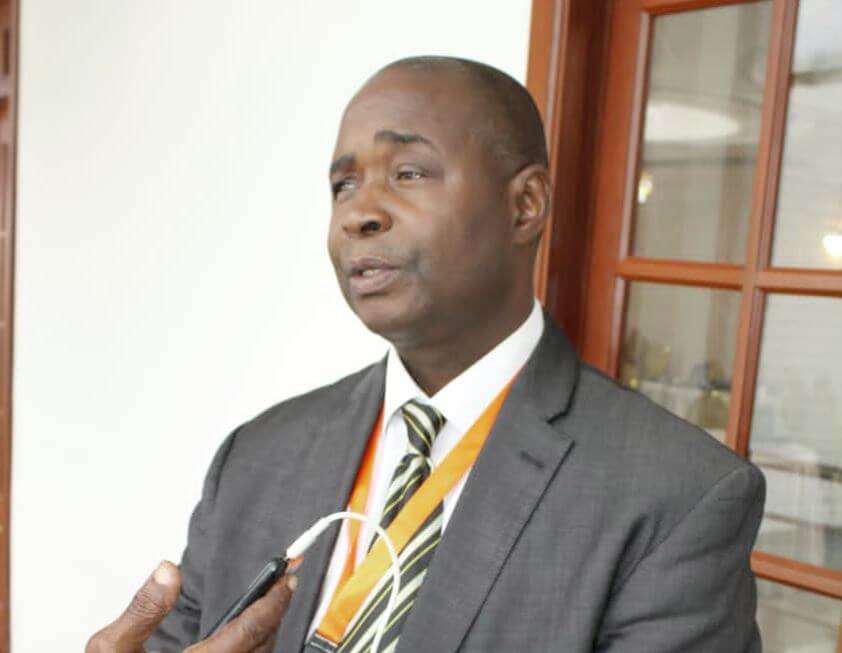
Professor Atangana averred that the framework linking all reforms. He said that “sovereignty can only be realised through inputs of our currency as capital and land titles or cadastral guarantees”. In his presentation, he argued that Cameroon cannot control minerals through percentage clauses alone. Real control requires three assets: banks with CFA and foreign exchange capacity to lend, capital to match foreign investors, and a digital registry with bankable titles that lenders trust. “Laws fix percentages. Capital fixes power,” he said. He warned that without the three, Cameroon will keep mining but keep exporting jobs and importing finished steel, aluminum and cement. He urged the state to treat bank capacity and Sonamine (the state mining apparatus with CFA 10 billion capital) funding as sovereign (our) projects.
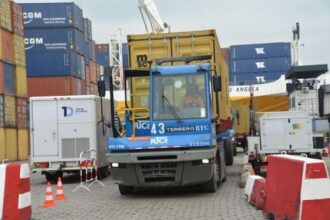
The Assistant Director in charge of Technical Development at the Ministry of Mines, Industry and Technological Development Nkouakep Nzengang Clotaire presented the ministry’s industrial plan to The SUN. He coined a structure of 4 corridors and the elimination of less valuable revenues. He tied projects to four key highways being Ocean for steel from low-grade iron, Djum-Balam for high-grade iron with rail to Douala or Kribi, Yaoundé-Ngaoundéré for bauxite to alumina to aluminum, and Figuil-Mintom for limestone to clinker and ceramics. “We export ore and import products. That is why we do not build roads, we do not transform,” he said. He told The Sun that future mining permits will be tied to processing commitments and that raw ore exports will be restricted where local transformation is viable. “Corridors are infrastructure projects first, then mining projects second,” he stated.

Prof. Oumarou Sanda addressed artisanal mining reform. He coined the new order that artisanal mines should at least produce 5kg of mined resources every month with a Cameroonian shareholding of at least 51 percent, an environmental certificate, and a rehabilitation bond tracked through a standardised global production system. “The aim is to end disorder, smuggling and land damage before we scale industrial mining,” he told The Sun. He acknowledged the 5kg threshold could exclude small miners who lack capital. His recommendation is to pair enforcement with support which is equipment leasing, training, and fair buying centres. “Order without support equals exclusion,” he warned.
Mukeng Mwinzengleng, a mining lawyer from the Democratic Republic of Congo who consulted at the forum, told The Sun that many Cameroonian promoters fail at the bank. He coined the advice “Speak Banking, Get Money”. In his presentation he said bankers do not fund geology. They fund risk versus return. Local entrepreneurs pitch deposits while banks want credit files of equity contribution, off-take agreements, collateral, cash flow models and ESG or other compliances. “If promoters learn banker’s language, discussion opens and projects progress,” he said. He urged chambers of mines and commercial banks to train entrepreneurs on bankable files so Cameroon’s pipeline stops being empty and also recommended miners cooperatives.
Mr. Mpondo, in charge of macro-economics and geopolitical complexities, gave The Sun two linkages. First, “The CFA Currency Trap”. He explained that national banks do not create CFA and many are subsidiaries of foreign parents built to serve home-country investors. “If the bank has no foreign exchange, loans to miners fail no matter how good the deposit is,” he said next, he argued that public debate on 35 percent or 65 percent state share misses the point. The investment decree ties state share to capital contributed. “Sonamine’s 10 billion FCFA cannot buy a real stake in billion-FCFA mines,” he told The Sun. His twin fixes are to build banks with full capacities and increase Sonamine’s capital so the state can pay its share and earn real equity.
Taken together, the six presentations point to one conclusion. Cameroon’s bottleneck is not ore. It is finance, structure and enforcement. Salla wants titles to be bankable. Atangana wants CFA, capital and cadastre. MinMidt wants corridors that process before export. Prof. Sanda wants artisanal order with support. Mukeng wants promoters to speak banker’s language. Mpondo wants capital, not only percentages.
To conclude, if the new policy turns those six options into law, bank practice and field enforcement, Cameroon can shift from exporting embryonic values to keeping added value and jobs.