BY SIMON NDIVE KALLA AND Ikome Christie-Noella Eposi
The management of the Cameroon Development Corporation has promised its workers payment of salaries arrears will commence this week in a move to appease striking workers and generally improve the tense climate throughout the company.
The gesture to pay is not because the company has improved on its finances, on the contrary the company is still in financial dire straits.
The General Manager of Cameroon Development Corporation (CDC),rFranklin Ngoni Njie, says the corporation made FCFA 24 billion in revenue in 2025, but the figure is still less than half of pre-crisis earnings.
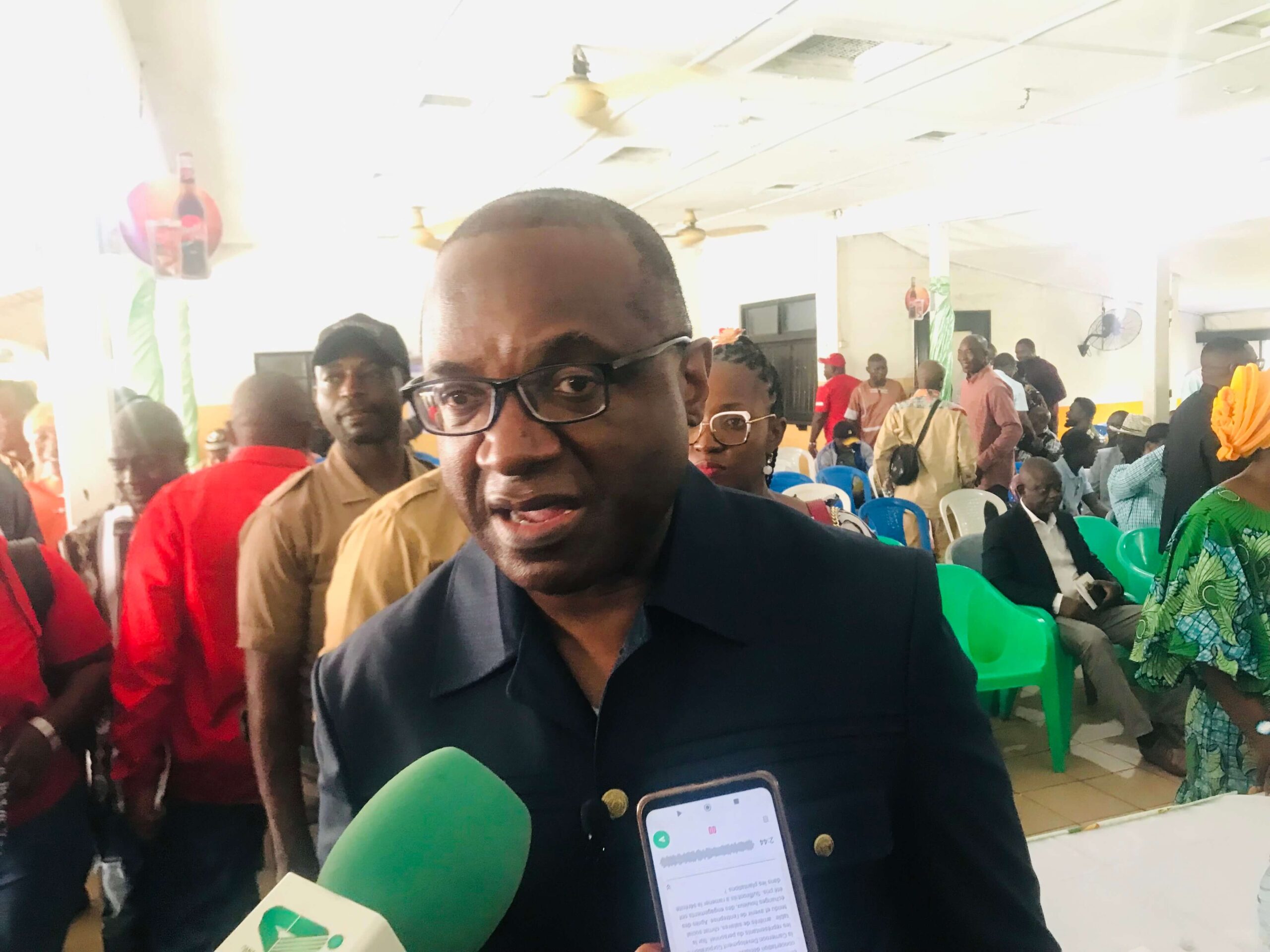
He made this revelation on Friday, June 26, 2026, at the Corporation’s annual management meeting at SS Club Bota. The result was “far… less than 50 percent from where we were before the crisis” in the Northwest and Southwest Regions.
“The general picture of our performance for last year is not as good as we expected… We ended the year 2025 with a revenue of above FCFA 24 billion,” Mr. Njie told over 300 top managers, staff representatives and trade union leaders.

From FCFA 50bn to FCFA 4.3bn at crisis peak
The GM noted that insecurity had dragged CDC revenue from an average of over FCFA 50 billion annually to as low as FCFA 4.321 billion in 2019. Revenue is now recovering gradually as peace returns, with income from rubber, bananas and palm oil.
For January to May 2026, the Corporation has already made about FCFA 12 billion, according to Head Office Management Controller Francis Mbock Otto. He said the amount still cannot cover all financial commitments, including salaries for the Corporation’s 15,000+ workers.
Government bailout, but monthly pay still a challenge
The state intervened at the end of 2024 and 2025 with FCFA 35 billion to clear salary arrears from 2018 to 2022. Despite that, CDC has struggled to pay monthly wages regularly. Last week, rubber workers in Tiko downed tools over months of unpaid salaries. CDC must produce more to survive,”
“The only way the corporation can pay monthly wages regularly is for workers to step up production.” He explained that monthly sales fund wages, taxes, healthcare, fuel, electricity and other needs. GM said.
Performance awards launched
To motivate staff, management gave prizes to the three best workers in bananas, oil palms and rubber. Mr. Njie said the scheme will be extended to other service departments by the end of 2026.
Trade unions table solutions
Union leaders proposed ending insecurity in vulnerable areas, maintaining staff housing, and improving the transport fleet. They also said motivation should include verbal appreciation and equal treatment for production and service workers.

They raised concerns over the Mondoni Oil Mill in Tiko, where irregular electricity has forced reliance on costly thermal generators. The Illoani Oil Mill in Ndian, built in 2011 at FCFA 7 billion, is also out of use after installations were vandalized during the crisis.
Retooling deal pending
Before the close of 2025, the government signed a FCFA 51.8 billion contract with French firm Tylium to build a new oil mill at Idenau and a rubber factory at Tiko within 25 months. Workers say they are still waiting for work to start.
New staff reps installed
The meeting ended with the installation of newly elected staff representatives, commissioned by SW Regional Delegate of Labour and Social Security, Ms. Yvette Lyonga.
GM visits striking workers, appeals for end to strike
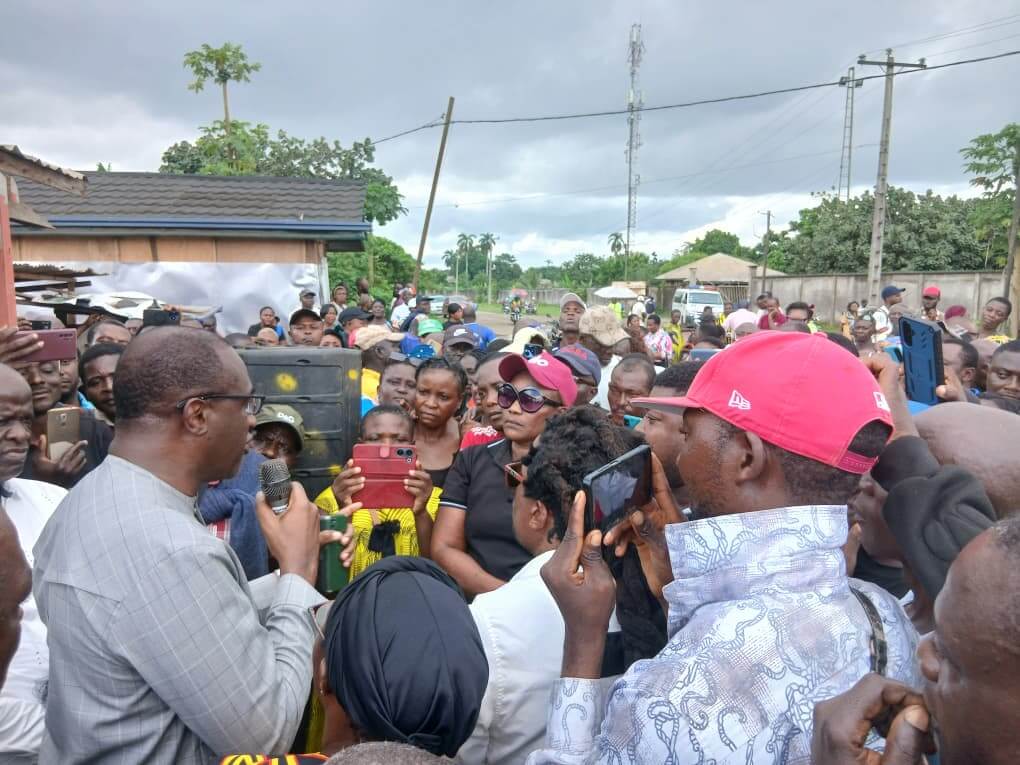
The General Manager of the Cameroon Development Corporation (CDC), Franklin Ngoni Njie, has appealed to workers to return to their duty posts while assuring them that management is working to resolve the challenges confronting the corporation. His appeal came during a meeting with disgruntled labourers and staff at the Way Bridge near the Technical Office in Tiko on June 23, following weeks of strike action over unpaid salaries and deteriorating working conditions.
The visit, intended to calm tensions and reopen dialogue between management and employees, provided workers with an opportunity to voice frustrations that have accumulated over several months. While some employees welcomed the General Manager’s outreach, others maintained that meaningful action rather than promises was needed to restore confidence.
During the meeting, workers painted a grim picture of life within the corporation, revealing that salary arrears varied significantly among employees. Some claimed they had gone without pay for as long as 36 months, while others reported not receiving salaries since February or being owed four months’ wages. The prolonged delays, they said, have plunged many families into severe financial hardship.
Several workers narrated how their inability to meet basic household expenses had affected their children’s education, with some pupils reportedly sent home from school or denied report cards because tuition fees had not been paid. Others described the emotional and psychological toll of struggling to provide food and other necessities for their families despite remaining committed to the corporation.
Employees also criticised what they described as poor communication between management and the workforce. According to them, the absence of regular updates on the corporation’s financial situation has created uncertainty and frustration among staff. “As a father, I am crying. If we are lying in what we have spoken, investigate our families. Our pots are empty,” one emotional worker told the General Manager, reflecting the depth of despair among many employees.
Beyond salary concerns, workers highlighted deteriorating working conditions across several CDC facilities. They complained of broken toilets, dry water taps, neglected surroundings and inadequate infrastructure that they said had made the working environment increasingly difficult.
Medical personnel also expressed concern over shortages of essential supplies in CDC health centres. One health worker, identified as Rosemary, lamented that the lack of medical equipment and consumables was undermining the quality of healthcare services provided to workers and surrounding communities.
Despite their grievances, several employees reaffirmed their attachment to the corporation, urging the General Manager to take decisive steps to restore the institution’s former prestige. They encouraged him to conduct regular field visits to better understand the realities facing workers on the ground. “Touch all services with your hands. You are a father; you know where all the issues are coming from,” one employee appealed.
Workers also called for the rehabilitation and maintenance of rubber plantations, arguing that overgrown bushes posed security risks and negatively affected productivity. They pledged their continued support for efforts aimed at reviving the corporation but stressed that visible improvements were urgently needed.
Responding to the concerns, Franklin Ngoni Njie acknowledged that the Cameroon Development Corporation was facing a difficult period. He admitted that the corporation was in crisis but assured workers that efforts were underway, with the support of government, to improve the situation.
The General Manager recognised the payment of salaries as a key responsibility of management and assured employees that work was ongoing to address the arrears. He further pledged to strengthen communication between management and staff to ensure that workers are kept informed about developments affecting the corporation.
In a move aimed at promoting greater collaboration, Njie announced that workers’ representatives would be invited to participate in technical meetings so that employees’ concerns could be directly incorporated into management discussions and decision-making processes.
He also expressed appreciation for the dedication shown by employees despite the numerous challenges confronting the corporation, assuring them that this year would bring better prospects than the previous one.
However, his assurances did little to immediately soften the workers’ position. As the General Manager concluded his visit and departed the venue, employees repeatedly chanted, “No money, no work,” signalling their determination to continue withholding their services until concrete action is taken on outstanding salary payments.
The encounter highlighted the enormous challenges facing one of Cameroon’s largest agro-industrial corporations. While management has pledged reforms, improved communication and renewed engagement with staff, workers insist that the corporation’s recovery must begin with the settlement of salary arrears and meaningful improvements in working conditions. The coming weeks are expected to determine whether the renewed dialogue can pave the way for lasting industrial peace and the revival of the CDC.