Home / Uncategorized / ADC Nears BVMAC Listing, but Key Financing Question Remains

ADC Nears BVMAC Listing, but Key Financing Question Remains

ADC nears BVMAC listing, but key financing question remains

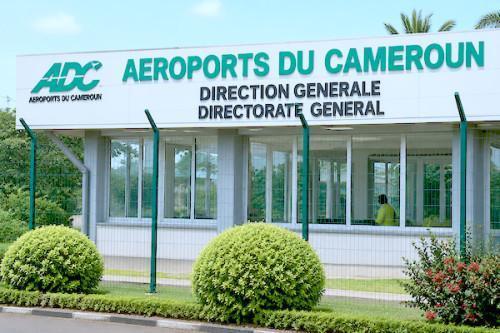
Cameroon's airport operator, Aéroports du Cameroun (ADC) has moved a step closer to joining the Central African Stock Exchange (BVMAC), nearly four years after the government announced plans to list part of its portfolio of state-owned companies.

The key question now is whether the transaction will provide fresh funding for the company or simply allow the government to sell part of its stake.

Following a June 24 assessment workshop held in Kribi, BVMAC Director General, Louis Banga Ntolo said ADC has reached the level of preparation required for admission to the exchange's Premium segment.

"At this stage, we can say that ADC is ready to be listed on the stock exchange, and in the Premium segment," he said, according to comments published by Cameroon Tribune on July 20. The workshop brought together ADC executives, BVMAC officials, and advisors Deloitte & Touche, NYA & Co, and Emerald Securities Services Bourse, which are supporting the listing process.

While the assessment marks an important milestone, it does not amount to formal approval. No prospectus has been approved, no clearance has been issued by the Central African Financial Market Supervisory Commission (COSUMAF), and BVMAC has not yet announced a final admission decision.

Several key elements also remain undisclosed, including ADC's valuation, the percentage of shares to be offered to investors, the number and price of shares, the subscription period, and the expected listing date. Without those details, it is impossible to estimate how much capital could be raised, the extent of shareholder dilution, or the potential returns for investors.

The project dates back to September 2022, when the Cameroonian government selected ADC, the Port of Douala Authority, the Cotton Development Corporation (SODECOTON), and Cameroon Hotels Corporation as the first state-owned or state-backed companies to be listed on the regional exchange.

The initiative is part of a CEMAC-wide policy introduced after the region's financial markets were unified in 2018. The framework requires member states to gradually float all or part of their holdings in certain public and semi-public companies through the stock market.

ADC became the first of the four companies to begin concrete preparations. In January 2023, it launched a call for expressions of interest to recruit a brokerage firm to manage the transaction, eventually appointing Emerald Securities Services Bourse.

BVMAC had already reminded stakeholders in November 2023 that financial structuring, appointing an approved broker, obtaining COSUMAF approval, and securing final admission to the exchange were all separate stages of the process.

The latest assessment therefore confirms progress but does not indicate that all regulatory requirements have been completed. Even so, a representative of Cameroon’s Ministry of Finance said ADC could become the first of the four companies selected in 2022 to complete its listing.

Financial profile

ADC already satisfies several of BVMAC's quantitative requirements for admission to the Premium segment. The exchange requires companies to have at least CFA100 million in share capital, annual revenue above CFA15 billion, profits in at least two of the three years preceding the listing, and dividend payments during that period.

ADC reported share capital of CFA436 million and revenue of CFA36.89 billion in 2025. The company posted profits in 2023, 2024, and 2025, and paid a CFA550 million dividend for the 2024 financial year. However, the company's market capitalization, the percentage of shares to be floated, and the minimum amount to be offered to the public will depend on the valuation ultimately assigned to the business.

To qualify for the Premium segment, ADC must achieve a market capitalization of at least CFA10 billion and float between 10% and 20% of its shares, depending on the company's valuation. The minimum public offering must range from CFA5 billion to CFA15 billion and include at least two million shares held by no fewer than 200 shareholders.

Despite meeting these thresholds, ADC's latest financial results present a more mixed picture.

Net profit fell 72.4% to FCFA 2.54 billion in 2025 from FCFA 9.2 billion a year earlier, even though revenue remained broadly unchanged. As a result, the company's net profit margin declined from roughly 25% to 6.9%.

EBITDA also dropped 20.5% to FCFA 7.88 billion. Based on year-end shareholders' equity, ADC generated an accounting return on equity of about 6.2% in 2025. The balance sheet nevertheless remains solid, with shareholders' equity totaling FCFA 41.23 billion and net cash of FCFA 23.40 billion at the end of the year.

However, that cash position was significantly boosted by the exceptional receipt of FCFA 22.8 billion from the securitization of ADC's claim on Camair-Co. As a result, it does not solely reflect the company's recurring ability to generate cash from operations.

Similarly, the sharp increase in profit recorded in 2024 was influenced by accounting treatment related to the Camair-Co receivable and should not be viewed as representative of ADC's underlying earnings capacity.

The financial statements published for 2025 were prepared under OHADA accounting standards. The information released after the workshop does not indicate whether the IFRS financial statements required for a Premium listing have already been completed and certified by two approved external auditors.

Will the IPO raise new capital or fund the state?

The biggest unanswered question is how the transaction will be structured. When ADC launched the listing process in 2023, the company said going public would strengthen its equity base and help finance future investments. More recent communications, however, have focused on the sale of part of the government's existing stake.

The distinction is significant. If the offering consists solely of existing shares, the proceeds would go to the selling shareholder, most likely the Cameroonian government, without providing new funding for ADC itself.

A capital increase, by contrast, would inject fresh money into the company to support investment plans, although it would dilute shareholders who choose not to participate. A combination of new and existing shares also remains possible.

The issue is particularly important because ADC faces substantial investment needs. In 2025, the company spent nearly FCFA9.8 billion on capital expenditures. It also signed a €58.4 million (about FCFA 38.31 billion) loan agreement with the French Development Agency (AFD) to finance the rehabilitation of the passenger terminal at Douala International Airport.

For now, the positive assessment from BVMAC confirms that ADC is making progress toward a stock market listing, but it does not yet reveal the transaction's financial significance. That will only become clear once the company publishes its prospectus, sets the IPO price, discloses the free float, and announces the timetable.

At this stage, ADC has earned BVMAC's endorsement of its readiness. Investors, however, are still waiting to learn what they will actually be able to buy, at what price, and whether the capital raised will strengthen the company or primarily benefit the state as the selling shareholder.

Leave a Reply

Your email address will not be published. Required fields are marked *