Home / Uncategorized / UK Prime Minister

UK Prime Minister

UK Prime Minister under pressure after devastating local election losses

MPs Call for Starmer to resign or set timetable to step down

By Innocent Fowung (UK Correspondent)

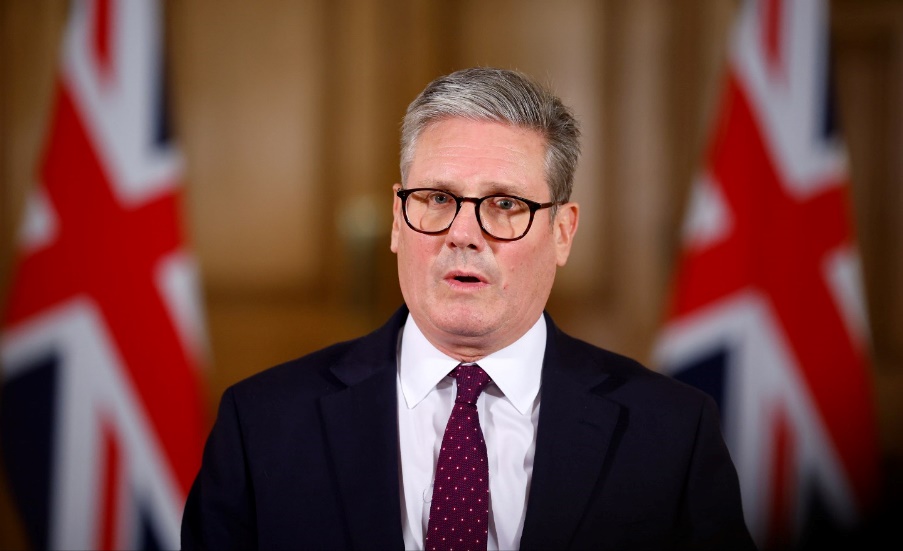
The Prime Minister, Sir Keir Starmer, is facing the gravest crisis of his premiership, as mounting pressure from within the Labour Party threatens his grip on office following a bruising set of local election results that have shaken the foundations of his government.

After a dramatic electoral night earlier this month, Labour suffered sweeping losses across England, Wales, and parts of Scotland. The fallout has prompted calls from senior cabinet ministers and more than 80 MPs for Starmer to resign or, at the very least, outline a clear timetable for his departure.

The crisis has deepened significantly in recent days. A wave of resignations has hit the government, including four ministers who stepped down in protest, publicly urging the prime minister to leave office.

Despite the growing rebellion, Starmer has remained defiant. Acknowledging the scale of the defeat, he insisted he would stay on, vowing to “do better.” He has warned that launching a leadership contest at this moment could plunge the country into further instability.

A crushing mandate reversed

The 2026 local elections—held across more than 5,000 seats in 136 councils—have delivered one of the most dramatic reversals for a governing party in recent memory.

Labour lost more than 1,200 council seats and control of over 30 councils, with defeats stretching from traditional northern heartlands to parts of London and Wales, where the party had dominated for nearly three decades.

Symbolic losses underscored the depth of the collapse. Councils such as Tameside, held by Labour for almost 50 years, slipped from its control, while towns including Hartlepool, Tamworth, and Redditch also turned away from the party.

Analysts noted that Labour lost more than half of the seats it was defending—clear evidence of a deep erosion of support even in areas once considered secure strongholds.

The results have now triggered a full-scale internal revolt. Senior figures, including Home Secretary Shabana Mahmood, are reported to have urged Starmer to prepare for a leadership transition, while several cabinet members have privately called for an orderly exit plan.

The crisis intensified dramatically when four ministers—Jess Phillips, Miatta Fahnbulleh, Alex Davies-Jones and Zubir Ahmed resigned, citing a loss of confidence in the prime minister’s leadership and urging him to step aside.

In a further blow, Health Secretary Wes Streeting has also resigned, becoming the most senior figure to quit and signalling a potential leadership challenge.

Reforms surge amid fragmented politics

The elections have also confirmed the rise of a powerful new political force. Reform UK, led by Nigel Farage, emerged as the biggest winner, gaining more than 1,300 councillors and taking control of around 13 to 14 councils.

The party made major inroads into Labour’s traditional base in the North and Midlands, signalling a significant shift in voter loyalties and underlining growing dissatisfaction with mainstream parties.

Other parties also capitalised on Labour’s decline. The Liberal Democrats, led by Ed Davey, added hundreds of councillors, while the Green Party expanded its footprint and secured key mayoralties, including in parts of London.

The Conservative Party, under leader Kemi Badenoch, also suffered losses but remained competitive, retaining a significant share of the vote and, in some areas, gaining ground at Labour’s expense.

Taken together, the results point to a fragmented political landscape. Britain’s long-standing two-party dominance appears increasingly under strain, giving way to a more competitive multi-party system.

Implications for the next general election

The implications of these results for the next general election are profound.

Election modelling suggests that if local voting patterns were replicated nationwide, Britain could face a hung parliament. Reform UK could potentially emerge as the largest party, though still short of an outright majority.

Early projections based on national equivalent vote share place Reform at roughly 27%, ahead of the Conservatives on about 20%, with Labour trailing in third place—only narrowly ahead of the Liberal Democrats and the Greens.

Such a scenario would represent a historic political realignment. Labour, which secured a decisive general election victory in 2024, could see its parliamentary representation collapse to little more than 100 seats under these projections.

The fragmentation of the vote raises the likelihood of complex coalition negotiations, with no single party able to govern alone. Analysts warn this could usher in a period of prolonged political uncertainty, with smaller parties holding the balance of power.

For Labour, the message from voters is stark: the party is losing support on multiple fronts—both to Reform on the right and to the Liberal Democrats and Greens on the centre-left.

Unless this trend is reversed, the next general election could dramatically reshape the political map and potentially end Labour’s hold on power.

A defiant Prime Minister

Despite mounting pressure, the Prime Minister has refused to step down. Allies argue that removing him now would risk destabilising the government and repeating the leadership turmoil seen in previous administrations.

In a statement following the results, Starmer said he takes full responsibility but will continue, framing the outcome as a “message from voters” demanding faster delivery rather than a wholesale rejection of his leadership.

However, critics within his own party warn that failing to act decisively could deepen Labour’s crisis. With at least one senior cabinet minister and multiple junior ministers already resigning, and more MPs openly rebelling, the pressure shows little sign of easing.

For now, Sir Keir Starmer remains in Downing Street, determined to ride out the storm. But with ministers resigning, cabinet divisions widening, and MPs openly rebelling, his premiership is entering its most perilous phase yet.

Whether he can survive the mounting political storm or becomes its next casualty, this may be decided in the coming days.

UK Prime Minister under pressure as MPs Calls to Quit

Leave a Reply

Your email address will not be published. Required fields are marked *