Gov’t strips councils of tax collection
By Norbert Wasso Binde
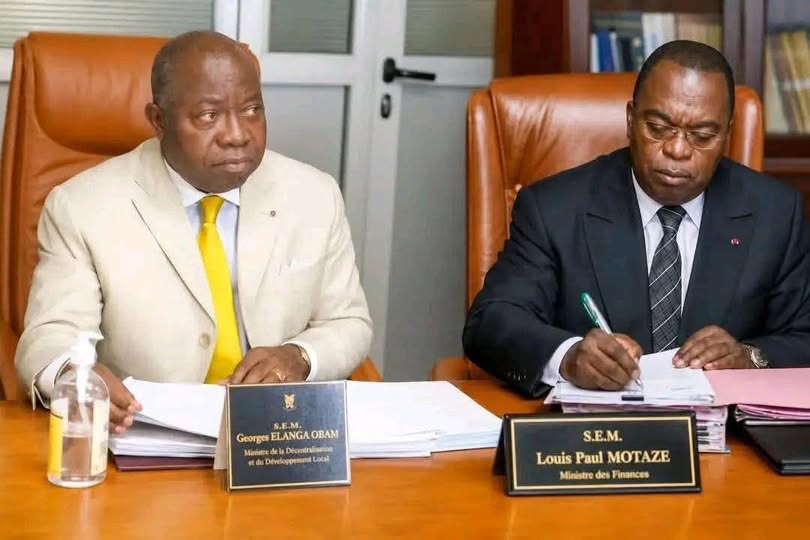
The Cameroonian government officially regains control of local taxation. Through a joint decree signed by the Minister of Finance, Louis Paul Motaze, and the Minister of Decentralization and Local Development, Georges Elanga Obam, councils, city councils and subdivisonal councils, have been stripped of their authority to issue, assess, and collect local taxes, transitioning these powers direct;y to the state.
The directive by both ministers has provoked groundswell criticism with some saying the move only goes to betray government’s bad faith over the decentralization process since it started in 2015.
The new reform follows a joint ministerial order signed by Louis Paul Motaze and Georges Elanga Obam. It operationalizes Law No. 2024/020 of 23 December 2024 on local taxation and places the collection of local taxes, duties, and municipal charges under the authority of the Directorate General of Taxation (DGI).
Under the new framework, municipal councils, subdivisional councils, and city councils will no longer have the mandate to assess, issue, or recover local taxes and revenues. Article 13 of the implementing order formally transfers these responsibilities from local authorities and their accounting services to the State tax administration.
Rather than directly collecting revenues, councils will function through newly established Local Taxation Monitoring Units. Their role will now focus on identifying taxable persons and businesses, transmitting taxpayer information to tax authorities, supporting field operations, supervising collection activities, and producing reports on local tax performance.
Government authorities argue that the reform seeks to improve transparency, reduce leakages, increase efficiency in revenue collection, and establish uniform tax administration across the country.
For many years, councils depended largely on internally generated revenues such as market fees, advertising taxes, permits, and other local levies to fund development projects and administrative activities.
While critics argue the implementation of decentralisation is gradually becoming centralisation, others believe it’s a great move as this revenue have often been siphoned by local administrators with no accountability taking municipalities back in time.