Home / Uncategorized / Dead in the Lake Chad Dark

Dead in the Lake Chad Dark

Dead in the Lake Chad Dark: Nigeria’s Biggest Counterterrorism Win — And Why the War Isn’t Over Yet

The killing of Abu-Bilal al-Minuki, ISIS’s global second-in-command, in a joint US-Nigerian strike is historic. But for a conflict that has claimed over 35,000 lives since 2009, one bullet doesn’t end a war.

By Aminu Adamu

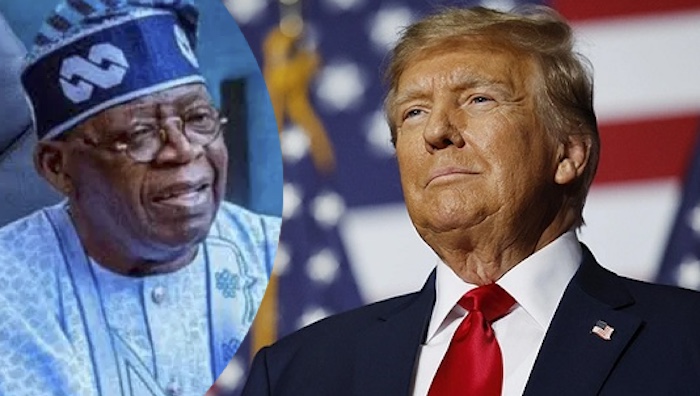
On the night of Friday, May 15, 2026, somewhere in the dense, politically volatile terrain of the Lake Chad Basin, a man named Abu-Bilal al-Minuki was killed. With him died several of his lieutenants. The operation was swift, coordinated, and, by all accounts, meticulously planned.  Nigerian President Bola Ahmed Tinubu thanked his American counterpart for the partnership. And for a brief, remarkable moment, two governments that have not always seen eye-to-eye on terrorism, religion, and regional politics stood together to announce one of the most significant targeted killings in the history of African counterterrorism.

But who exactly was Abu-Bilal al-Minuki? What does his death mean for Nigeria’s 17-year war against jihadist insurgency? And does it significantly weaken ISIS’s African franchise or is this the kind of headline victory that looks better in press releases than it feels on the ground in Borno State?

These are the questions a conflict analyst must ask. Let’s start with the facts.

The Man Who Was Hiding in Africa

Abu-Bilal al-Minuki, also known as Abu Bakr ibn Muhammad ibn Ali al-Mainuki, or simply Abu Mainok  was not a shadowy mystery figure to Western intelligence. , the same state that has been the epicentre of the Boko Haram insurgency since 2009. He knew the terrain. He understood the people. He had grown up in the very communities he would later help terrorise.

According to  and the , al-Minuki rose through the ranks of the Islamic State West Africa Province (ISWAP) the ISIS-affiliated faction that broke from Boko Haram in 2016 to become the Lake Chad division commander under ISIS’s General Directorate of Provinces (GDP), the body that oversees all of ISIS’s international branches. , believed to be one of ISIS’s major financial and operational coordination networks across Africa.

In  a designation that blocks any US-held assets and prohibits American citizens or financial institutions from transacting with him. That designation was, in hindsight, both a warning and a death sentence. It meant the US was watching. It also meant the clock had started ticking.

Trump described al-Minuki as “the most active terrorist in the world.” That is a claim analysts should treat with appropriate scepticism it is a phrase calibrated for domestic political consumption. But stripped of the hyperbole, what is not in dispute is this: al-Minuki was the connective tissue between ISWAP’s field operations in the Lake Chad Basin and ISIS’s global command structure.  He was not just a fighter. He was the architecture.

Operation Hawkeye Strike: The Context Behind the Kill

This operation did not emerge from nothing. It was the product of a US counterterrorism campaign that accelerated sharply after  That attack triggered what Washington called Operation Hawkeye Strike a broader, more aggressive campaign to “sustain relentless military pressure” on ISIS’s global remnants.

, in northwestern Nigeria a region that had previously not been associated with ISWAP activity but where ISIS-linked groups have been expanding. Then came this operation. Then came the announcement.

Trump confirmed that the strike took place at al-Minuki’s compound in the Lake Chad Basin. , describing it as “a daring joint operation that dealt a heavy blow to the ranks of the Islamic State.” The statement noted that “early assessments confirm the elimination of the wanted IS senior leader, Abu-Bilal Al-Manuki, also known as Abu-Mainok, along with several of his lieutenants.”

“He thought he could hide in Africa, but little did he know we had sources who kept us informed on what he was doing.”

— President Donald Trump, Truth Social, May 15, 2026

What this tells us from an intelligence standpoint is significant. The operation required not just military capability but sustained human intelligence (HUMINT) on the ground sources embedded or recruited within or near al-Minuki’s circle in the Lake Chad Basin.  suggests a level of operational depth that signals serious US-Nigeria intelligence integration. This was deliberate. This was a surgical extraction of a leadership node.

Nigeria’s Long War: 17 Years of Blood and Borno

To appreciate the significance of this moment, you need to understand the weight of the conflict behind it.

 under the charismatic ideologue Mohammed Yusuf. After a violent 2009 crackdown in which Yusuf was killed in custody, the group re-emerged under Abubakar Shekau as a full insurgency. What followed was one of the deadliest conflicts in African history.

Leave a Reply

Your email address will not be published. Required fields are marked *