Cameroon Pushes for Africa-Wide AI Observatory for Media Industry
wo years after African media leaders gathered in Yaoundé to debate the future of artificial intelligence in journalism, organizers are now trying to turn those discussions into a continent-wide institutional project.
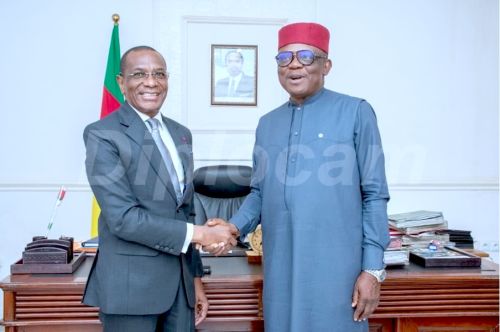
During a meeting held May 6 at Cameroon’s Ministry of External Relations, African Union of Broadcasting Director General Grégoire Ndjaka reviewed progress on initiatives launched under the Yaoundé Declaration, adopted at the 2024 summit on AI and media.
At the center of discussions with Acting Secretary General Gervais Bindzi Edzimbi was a project now being presented as a strategic priority: the creation of an African Artificial Intelligence Observatory.
The platform, backed by the African Union of Broadcasting, aims to help African media organizations adapt to the rapid transformation brought by AI technologies.
The project traces back to the summit jointly organized in Yaoundé by the African Union of Broadcasting and UNESCO from March 4-6, 2024.
The gathering brought together media executives, technology specialists, researchers and policymakers to address a question that has become increasingly urgent across the continent: how African media can integrate artificial intelligence without weakening journalistic ethics or increasing dependence on foreign technologies.
The discussions resulted in the adoption of the Yaoundé Declaration, presented at the time as a continental roadmap for the responsible use of AI in African media.
Since then, pressure on news organizations has intensified.
African media outlets are now confronting the rapid expansion of automated content-generation tools, the spread of AI-driven misinformation and growing demands for journalists to adapt to new digital technologies.
The proposed observatory is intended to respond to those challenges. Organizers envision a platform focused on monitoring, training and research that would help African media better understand, regulate and use emerging AI technologies. The future institution could also contribute to discussions on content protection, digital sovereignty and AI regulation across the continent. For Cameroon, the initiative strengthens a positioning strategy already underway in continental discussions around digital governance.
By hosting the 2024 summit, Yaoundé sought to establish itself as one of Africa’s central forums for debates about the future of media in the age of artificial intelligence.
Beyond the promises surrounding AI, organizers say the deeper issue involves whether African media can preserve credibility, editorial independence and influence in an information environment increasingly shaped by algorithms and automation.
Through the gradual implementation of the Yaoundé Declaration, the African Union of Broadcasting and its partners say they want to avoid a scenario in which Africa remains only a consumer of technologies developed elsewhere.
Their broader goal is to ensure the continent plays a role in defining its own standards, priorities and safeguards for the use of artificial intelligence in media.