Home / News / Hon.Osih Takes Finance Minister to Task Over Projected FCFA 300 Billion Loss

Hon.Osih Takes Finance Minister to Task Over Projected FCFA 300 Billion Loss

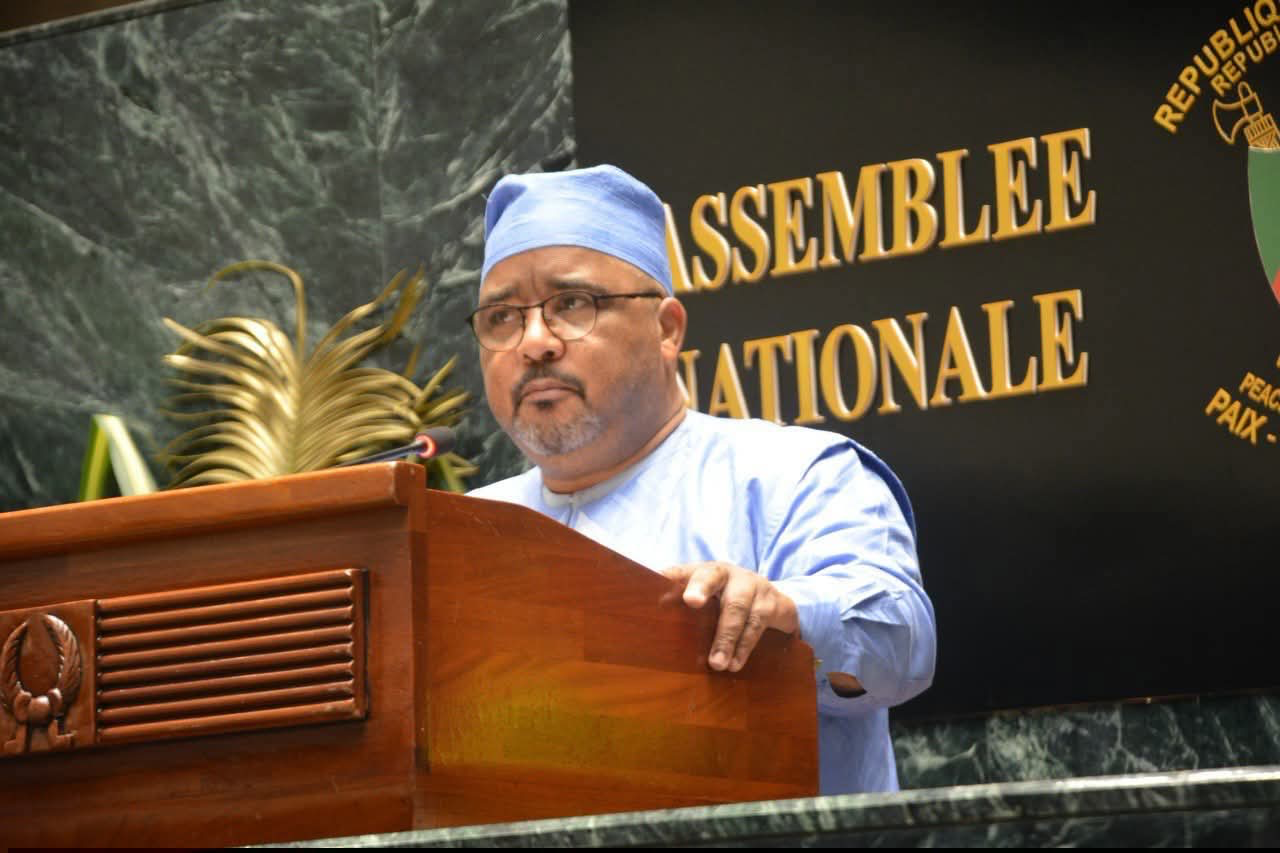
Hon. Osih Takes Finance Minister to Task Over SNH’s Projected FCFA 300 Billion Loss at the ongoing Budget Orientation debate, Hon. Joshua Osih pressed Finance Minister Louis Paul Motaze on the departure of Golar LNG from Kribi, the real results of the NDS30 strategy, and decades of neglected roads serving the Douala Port and Airport.

Hon. Joshua Osih is MP for Wouri Centre and National Chairman of the Social Democratic Front (SDF). He grilled Finance Minister Louis Paul Motaze during the ongoing 2027 Budget Orientation debate.

Osih raised sharp questions on the NDS30 development strategy, Cameroon’s growth slowdown, youth employment, and public debt. He also demanded answers on the looming revenue gap at the National Hydrocarbons Corporation (SNH). That gap traces back to Golar LNG’s planned departure from Kribi.

He opened with a clear challenge. A budget debate only matters, he said, if government answers with results, not intentions.

Six Years of NDS30: Where Are the Results?

Cameroon’s 2026 growth forecast just dropped from 4.3% to 3.5%. That 0.8-point fall wipes out an estimated 278 to 312 billion FCFA in national wealth, depending on whose figures you use, government’s or the IMF’s.

Osih asked the Minister to state the NDS30’s real execution rate. He asked why the government missed its 2025 targets. Has any independent body not government’s own staff ever measured the strategy’s real impact on ordinary Cameroonians? If no such evaluation exists after six years, he wants to know why.

Growth Targets, Purchasing Power, and Youth Jobs

Parliament’s growth targets keep missing the mark, Osih noted. He pressed the Minister to break down the shortfall. How much comes from external shocks? How much from governance failures at home? And why do official forecasts stay optimistic every year despite the pattern?

Food prices keep climbing despite years of an import-substitution policy. Osih asked a direct question. How many households have actually gained purchasing power since NDS30 launched? How much have local goods really replaced imports?

On jobs, he pointed to PAJER-U, PTS Jeunes (worth 102 billion FCFA), and PIAASI, all launched since 2017. He asked how many of the promised jobs are still real, active, and paid. Too many, he suggested, are one-time placements counted once and forgotten.

Public Spending, Debt, and Stalled Infrastructure

Osih asked what share of the national budget actually gets evaluated before renewal. He also asked about major loans taken out over the past ten to twenty years. How many debt-financed projects generate enough revenue to repay themselves? He challenged the Minister to name three examples, one good and one bad.

He pushed further on infrastructure. What percentage of Public Investment Budget (BIP) projects from the past five years are complete and running today? How many finished power, water, and road projects sit unused or stalled?

Missing From the Risk Map: Internal Political Risk

Government’s budget risk documents cover external threats at length: war, inflation, climate, oil prices. They stay silent on internal risk, even as Cameroon enters a sensitive institutional period, Osih said.

He asked why the risk map ignores political and governance risk. Rating agencies and investors now weigh these factors heavily. He also asked whether government has built backup scenarios for institutional, social, or security disruptions. What fiscal buffers exist to keep public services running through any of them?

FATF Compliance and Financial Crime

Weak enforcement against money laundering raises borrowing costs for governments, the Financial Action Task Force (FATF) has repeatedly warned. Osih asked for a precise update on Cameroon’s progress against FATF recommendations. How many money-laundering, corruption, or financial crime cases have ended in convictions and recovered funds over the past five years?

A Call for Accountability

Cameroon has cycled through strategy after strategy: DSCE, Vision 2035, now NDS30. Osih challenged the Minister to name five policies with measurable, independently verified impact. He followed up with a pointed question. Will government cut funding for policies that don’t work, and redirect that money in the 2027 Finance Bill?

Douala’s Neglected Roads: 20 Years and Counting

Osih turned to his own constituency. Wouri Centre alone generates roughly 60% of government’s direct revenue, he reminded the Minister. The Port of Douala drives 1,365 billion FCFA in economic activity and supports 166,000 families. Douala International Airport handles 80% of the country’s international air traffic.

Yet National Road No. 3 has stayed in poor condition for over 20 years. It runs from Deïdo Roundabout and serves both the Port and the Airport. An entire generation has grown up and had children of its own without ever seeing that road fixed, Osih said.

The Golar LNG Departure: A “Financial Catastrophe” for SNH

Osih closed with a question he called impossible to dodge. Has government prepared for the loss of 50% of SNH’s revenue  250 to 300 billion FCFA once Golar’s liquefied natural gas facility leaves Kribi?

He called the shortfall a “genuine financial catastrophe,” not just another line item. He demanded an emergency supplementary budget, not another promise: real text, real figures, a real timeline.

Full Text of Hon. Joshua Osih’s Intervention

(Translated from French)

Mr. Minister, this Budget Orientation Debate only has meaning if the Government agrees to respond not in terms of intentions, but in terms of verifiable results. After six years of the NDS30 and several decades of successive strategies, Cameroonians are no longer asking for plans: they are asking for accountability. I will ask a few questions. They call for figures, not speeches.

On the real record of the NDS30

The NDS30 is in its sixth year of implementation, and 2026 growth has just been revised downward, from 4.3% to 3.5%. A 0.8-point drop in economic growth for Cameroon in 2026 amounts to a loss of national wealth estimated at between 278 billion and 312 billion FCFA, depending on whether one relies on your figures or those of the IMF.

Question: What is the current rate of physical and financial execution of the NDS30, which 2025 intermediate targets have not been met, and does an independent evaluation exist not produced by your own services measuring its real impact on the standard of living of Cameroonians? If no such document exists after six years, can the Government explain why?

On the sincerity of macroeconomic assumptions

Question: For several years, the growth targets presented to Parliament have never been met. Can the Government state precisely, with supporting figures, what share of this gap is attributable to external shocks and what share is attributable to internal governance failures? And why do the assumptions remain optimistic every year despite this repeated negative record?

On purchasing power and import substitution

Despite years of an import-substitution policy presented as a priority, the prices of basic foodstuffs continue to rise.

Question: How many Cameroonian households have concretely seen their purchasing power improve since the launch of the NDS30, and what is the actual volume of imports effectively replaced by domestic production? A single verifiable indicator will suffice.

On youth employment

Question: Of the jobs announced since 2017 through PAJER-U, PTS Jeunes (worth 102 billion FCFA), PIAASI, and similar programmes, how many are still real, active, and paid jobs today — rather than mere temporary placements counted only once?

On the quality of public spending and debt

Question: What percentage of the budget has actually been subject to a performance evaluation before being renewed? And among the major loans contracted over the past ten to twenty years, how many debt-financed projects today generate revenues sufficient to repay that same debt? Can the Government cite three concrete examples, both positive and negative?

On the Public Investment Budget and infrastructure

Question: Over the past five years, what percentage of projects listed in the Public Investment Budget (BIP) is today actually completed and fully operational and how many delivered infrastructures, particularly in electricity, water, and roads, remain underused or at a standstill?

On internal political risks and the institutional transition

The DPEB details exogenous risks at length war, inflation, climate, oil prices but remains silent on internal risks, even as Cameroon enters a particularly sensitive institutional period.

Question: Why does the budget risk map contain no analysis of internal political risk, governance risk, or the business climate, when these factors are now central to sovereign risk assessments made by rating agencies and international investors? Has the Government built alternative macroeconomic scenarios accounting for possible institutional, social, or security disruptions, and what fiscal safety margins have been established to guarantee the continuity of public services regardless of the country’s political evolution?

On international financial credibility and the FATF

The FATF regularly points out that shortcomings in the fight against money laundering and illicit financial flows directly weigh on the cost of financing for States and on the attractiveness of investment.

Question: Can the Government present a precise status of implementation of the recommendations made to Cameroon by the FATF and competent regional bodies? How many money-laundering, corruption, or financial crime cases have resulted in final convictions and recoveries for the State over the past five years and what is the quantified impact of these shortcomings on the cost of our sovereign borrowing?

On trust and accountability

Mr. Minister, a budget is only as good as the trust it inspires among citizens, investors, and technical and financial partners.

Question: After several decades of successive strategies DSCE, Vision 2035, NDS30 can the Government name five public policies whose impact on the daily lives of Cameroonians has been objectively measured by independent indicators? And if a policy fails to demonstrate its effectiveness, is the Government prepared, in the 2027 Finance Bill, to reduce or eliminate the funds allocated to it in order to reallocate those resources to what actually works? That is the whole purpose of this Budget Orientation Debate: not to validate intentions, but to demand results.

Mr. Minister, let us talk about my constituency the one that, on its own, provides approximately 60% of your direct revenue.

The Port of Douala generates, directly and indirectly, 1,365 billion FCFA and sustains 166,000 families. Douala International Airport handles 80% of our country’s international air traffic. Douala, Mr. Minister, is not just another constituency: it is the economic lung of Cameroon.

And yet National Road No. 3, which runs from Deïdo Roundabout to serve that very Port and that very Airport, has been very bad for more than twenty years. Twenty years, Mr. Minister. An entire generation of Cameroonians has been born, has grown up, and now has children of its own, without ever seeing that road repaired. How do we explain to the truck driver who loses an entire day stuck in potholes, to the exporter who misses his ship, to the mother giving birth in a taxi trapped in the potholes, that the State has not found, in twenty years, the means to repair the very road that finances its own budget?

And I will close with a question that admits no evasion: Mr. Minister, has the Government taken measures to contain the announced loss of 50% of SNH’s revenues that is, 250 to 300 billion FCFA following the planned departure of the GOLAR liquefied gas facility off the coast of Kribi? This is not just another budget line, Mr. Minister: it is a gaping hole opening up in our public finances. It is a genuine financial catastrophe for our country, and it demands a response equal to its severity: an emergency supplementary budget not another promise, not yet another report, but a text, figures, and a timeline.

Tagged:

Leave a Reply

Your email address will not be published. Required fields are marked *