Home / Culture / Three new Notables installed at Limbe Royal Chiefdom, Mayor Nseke among honorees

Three new Notables installed at Limbe Royal Chiefdom, Mayor Nseke among honorees

By  Engah Peter Parkers

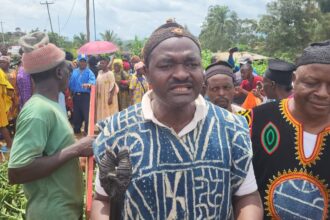
The courtyard of the 1st Class Royal Chiefdom of Limbe came alive on Saturday, May 2, 2026 as drums, chants, and traditional regalia set the stage for the installation of three new notables. Among them was Mayor Nseke Luma Dibotti, who was officially robed and recognized in a ceremony presided over by the Paramount Chief of Limbe, HM John Elufa Manga Williams.

The event, held under the theme “Rekindling the Flame of Our Cultural Heritage,” drew a cross-section of Fako society. Traditional rulers sat beside administrative authorities. CPDM militants stood shoulder to shoulder with fishermen and market women. Cultural dance groups from Bimbia, Wovia, and Batoke added color, rhythm, and ancestral weight to the occasion. The installation formalizes Royal Order N°056, signed on January 10, 2025, which named Mayor Nseke as a Notable of the Royal Chiefdom.

Reading from the Royal Order, the Chiefdom’s Secretary General cited the legal foundation for the appointments. The order was issued by the Paramount Chief of Limbe, Knight of the Cameroon Order of Merit, in strict compliance with Chieftaincy Law N° 77-245 of July 15, 1977. It also draws authority from Prime Ministerial Decision N° 004B of January 18, 2022, which confirmed HRH John Elufa Manga Williams as Paramount Chief of Limbe. Article 1 of the Royal Order is unambiguous: “Mr. NSEKE LUMA DIBOTTI is hereby appointed as the Notable of the Royal Chiefdom of Limbe.” Article 2 guarantees him “all the advantages and privileges attached to this position.” The appointments took effect on January 10, 2025.

Mayor Nseke, dressed in a flowing embroidered toge and a leopard-print cap, was the first to be called forward. He knelt before the throne as the Paramount Chief placed the traditional necklace of office around his neck. The moment the beads touched his chest, the courtyard erupted. Women ululated. Drums thundered. Two other distinguished sons of Limbe were also installed as notables during the same ceremony, though the Palace said their names would be published in a subsequent communiqué to allow proper family rites.

In his acceptance remarks, Mayor Nseke was measured but firm. He pledged to use his new role to bridge modern governance and ancestral tradition. “This is not just an honor for me, but a call to service,” he told the gathering. “The chieftaincy and the council must work hand in hand to preserve our identity, protect our mangroves, and guide our youth away from drugs and toward dignity.”

HM John Elufa Manga Williams was clear about the weight of the title. “A notable is the eye of the Chief among the people and the voice of the people before the Chief,” he said. “You must rekindle the flame of our heritage  our language, our fishing traditions, our Bakweri values especially for the younger generation that is losing its way.”

The ceremony blended royal protocol with popular celebration. The Wovia and Bimbia dance groups performed sacred steps rarely seen outside coronations. Elders poured libation to the ancestors of the Limba people, calling on those who first settled the coast to bless the new notables. Administrative officials present described the installation as a strategic move to strengthen collaboration between traditional authority and local government ahead of upcoming cultural festivals and municipal projects.

The event closed with a royal blessing. The new notables joined a slow procession through the palace grounds as griots recounted the lineage of the Limbe Chiefdom, from the first fishermen who named the bay to the chiefs who defended it.

With the May 2 installation, Mayor Nseke joins a council of advisors tasked with cultural preservation, conflict mediation, and upholding the customs of the coastal chiefdom. Palace sources hint that the new notables will play a key role in planning the famous Limbe Festival of Arts and Culture, ensuring that tradition is not just remembered, but lived.

Leave a Reply

Your email address will not be published. Required fields are marked *